Property
|
Product Name
|
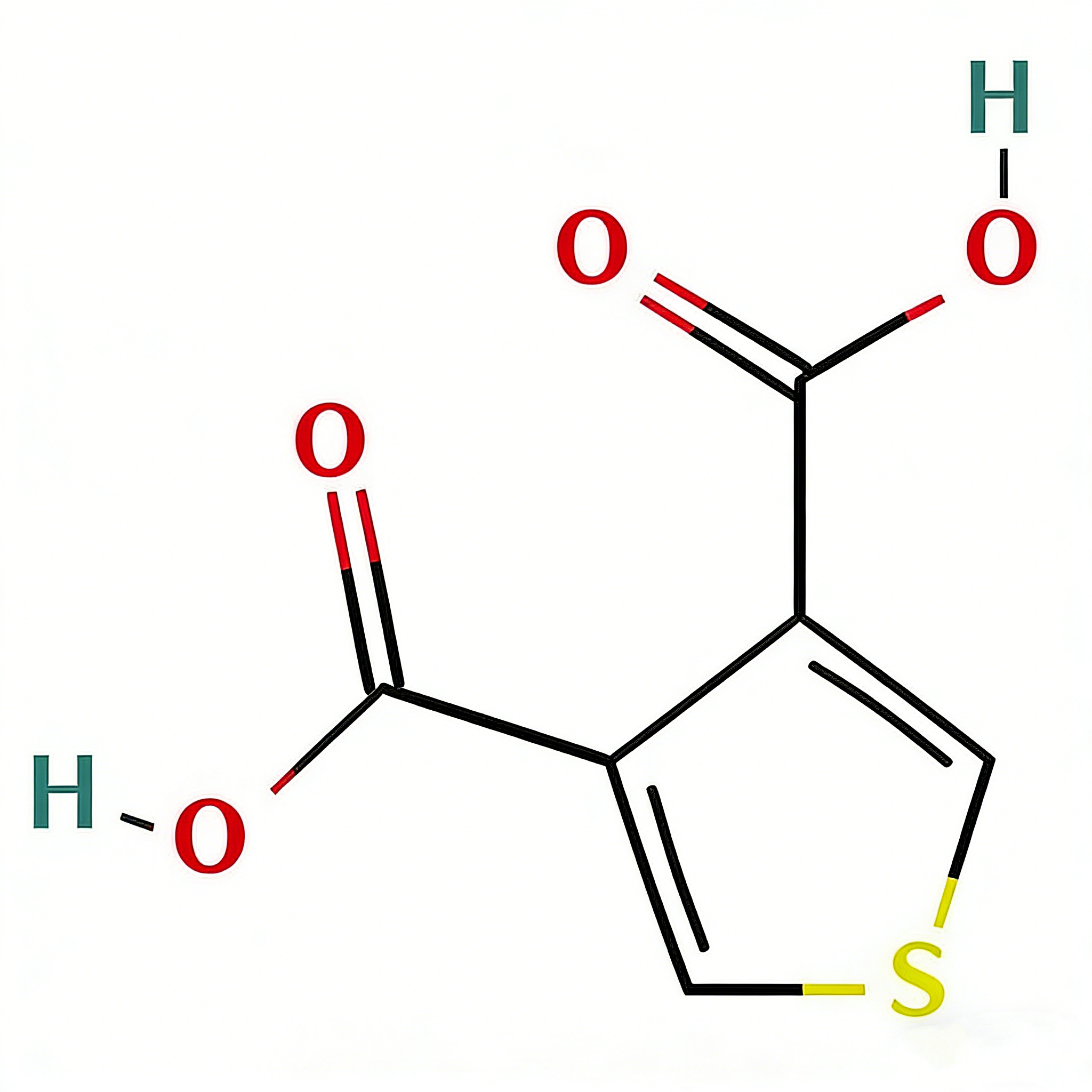
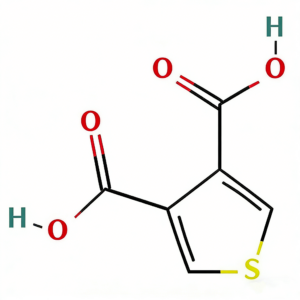
Thiophene-3,4-dicarboxylic acid
|
|
CAS Number
|
4282-29-5
|
|
Chinese Name
|
噻吩-3,4-二甲酸
|
|
Synonyms
|
3,4-Thiophenedicarboxylic acid; 3,4-Dicarboxythiophene; NSC 81793; NSC 672208; MFCD00067079
|
|
Chinese Synonyms
|
3,4-噻吩二甲酸; 噻吩-3,4-二羧酸; 3,4-二羧基噻吩; 噻吩二甲酸
|
|
Molecular Formula
|
C₆H₄O₄S
|
|
Molecular Weight
|
172.16 g/mol
|
|
Purity
|
≥ 98% (HPLC area normalization)
|
|
Product Category
|
Pharmaceutical Intermediates / Thiophene Derivatives / Heteroaromatic Dicarboxylic Acids
|
|
Appearance
|
White to Yellow to Orange Powder/Crystalline Powder
|
|
Melting Point
|
227-231°C
|
|
Storage Conditions
|
Store in a cool, dry, well-ventilated area away from light and moisture. Keep container tightly closed. Protect from strong oxidizing agents and bases to avoid decarboxylation or ring oxidation.
|
|
Shelf Life
|
24 months under recommended storage conditions
|
|
Packaging
|
100mg/vial, 500mg/vial, 1g/bottle, 5g/bottle, or customized according to customer requirements
|
|
Applications
|
Versatile building block for synthesizing organic semiconductors, conductive polymers, and metal-organic frameworks (MOFs) . Used in organic electronics (OLEDs, OPVs), pharmaceutical intermediates, and materials science applications
|
|
Reactivity
|
Suitable for esterification, amide coupling, anhydride formation, electrophilic aromatic substitution at C2/C5, metal coordination via carboxylate groups, and decarboxylative cross-coupling strategies
|